
The Eurydice Network publishes the report “Preparedness Education in Europe – 2025”: the study also covers Ukraine’s education system
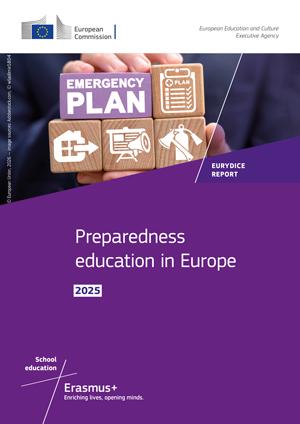
The European information network Eurydice has published a new comparative report, “Preparedness education in Europe – 2025”, focusing on the role of education in fostering children’s preparedness for various risks and crisis situations.
Ukraine also contributed to the data collection for the report. The National Unit of the Eurydice Network in Ukraine – the SSI “Institute of Educational Analytics” – participated in a survey conducted by the European Commission’s Directorate-General for Education, Youth, Sport and Culture (DG EAC), the results of which formed the basis for this study.
In today’s context, where climate-related disasters, cyber threats and geopolitical instability are becoming increasingly frequent, strengthening society’s preparedness for crisis situations is gaining particular importance. In response to these challenges, the European Union has developed the Preparedness Union Strategy, aimed at strengthening countries’ capacity to respond effectively to a wide range of threats. The strategy includes a set of actions designed to reinforce Europe’s preparedness for geopolitical tensions, cybersecurity risks and the impacts of climate change. One of its priorities is the integration of preparedness education into school curricula and the training of education staff, in line with the objectives of the Union of Skills initiative.
The report “Preparedness Education in Europe – 2025” analyses how preparedness education is integrated into early childhood and primary education systems across European countries (ISCED levels 0 and 1). Based on data relevant for the 2025/2026 school year, the study examines how education systems help children understand risks related to natural, technological and other crisis situations, while also developing the skills needed to cooperate effectively during emergencies.
The report also presents different approaches used by education systems to develop key preparedness skills among younger generations. In particular, it highlights that in early childhood education, the focus is on helping children notice danger, understand simple safety rules and practise protective behaviour through everyday activities and play. In primary education, this foundation expands into more practical and action-oriented skills, enabling pupils to understand why rules are necessary and how to respond more independently in emergency situations.
We invite education policymakers, researchers and experts to make use of the findings of this study in their professional and academic work.
European Commission: European Education and Culture Executive Agency, Preparedness education in Europe 2025 – Eurydice report, Publications Office of the European Union, 2026, https://data.europa.eu/doi/10.2797/0281387.